
As a merchant stepping into the world of Web3 commerce, you’ve likely mastered the art of accepting payments (see our guide here) and even begun integrating tokenized loyalty (check out our success stories). But a critical piece of your technology stack remains: the blockchain wallet. This isn’t just a place to store assets; it’s the backbone of your digital treasury, and the choice between custodial and non-custodial is paramount.
Why Wallet Choice Matters in Commerce
In Web2, your payment processor holds your funds and settles them to your bank account. In Web3, your wallet is your bank. The fundamental distinction lies in who controls the private keys—the cryptographic secret that proves ownership of the funds.
For merchants managing revenue, inventory funds, and potentially even tokenized loyalty rewards, choosing the right type of wallet defines your security model, operational efficiency, and regulatory compliance posture.
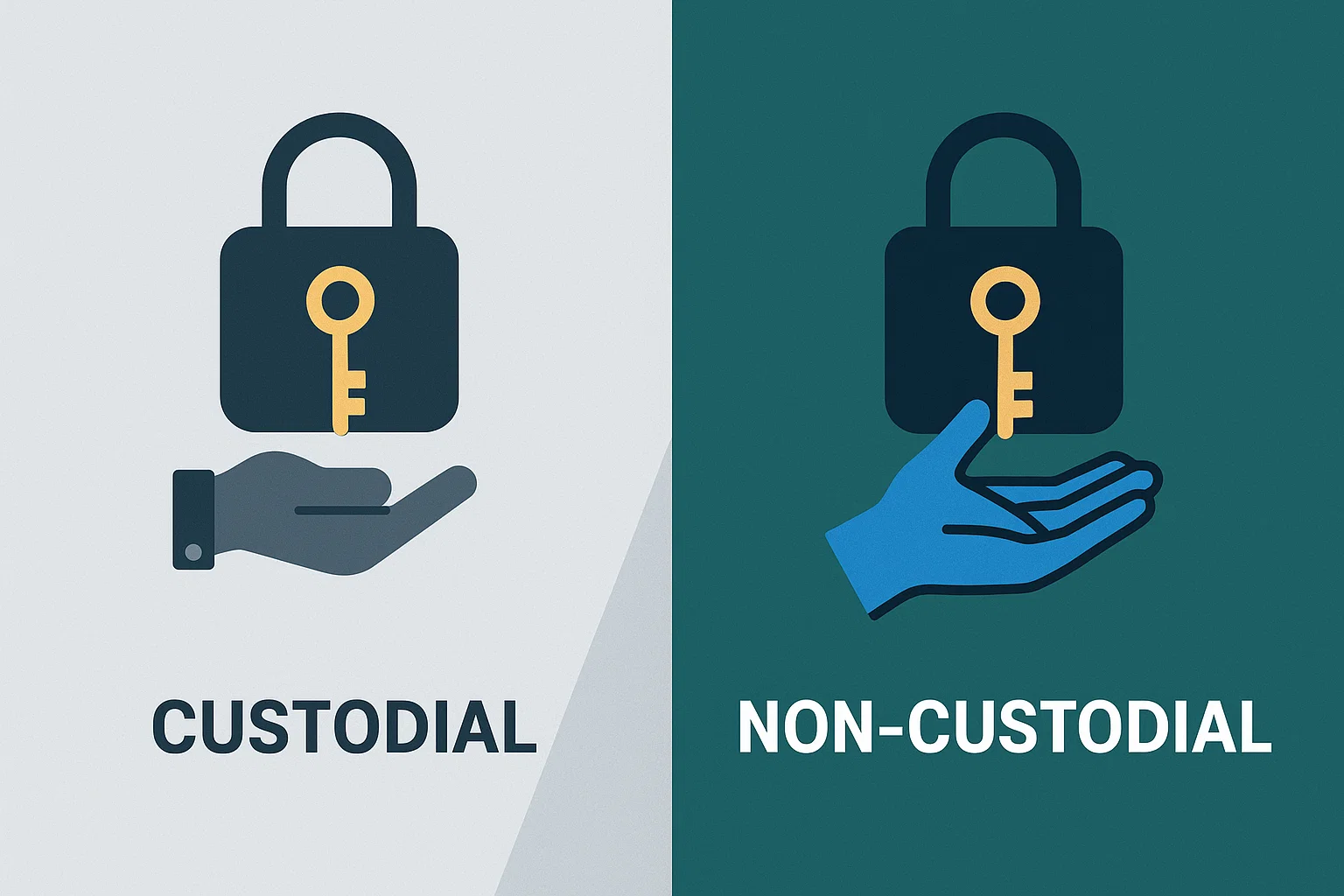
Custodial Wallets: The “Bank Account” Model
A custodial wallet is managed by a third party, such as a major cryptocurrency exchange or a specialized payment processor. The third party holds the private keys on your behalf. You control the account through a username and password, much like a traditional bank account.
Pros of Custodial Wallets for Merchants:
- Ease & Recovery: Forget your password? No problem. The custodian can recover your account, making it the lowest-friction option for large teams and non-technical staff.
- Familiar Compliance: Custodians are often licensed financial institutions subject to KYC (Know Your Customer) and AML (Anti-Money Laundering) regulations. This simplifies your regulatory burden, especially for fiat-to-crypto off-ramps.
- Operational Efficiency: Integration with payment gateways is seamless, as the custodian is typically the same entity handling the instant conversion and settlement.
Cons of Custodial Wallets for Merchants:
- Control & Counterparty Risk: You do not technically own the assets; you own a promise from the custodian. If the custodian is hacked or goes insolvent, your funds are at risk. This is a major consideration for asset holding, as noted by sources like Investopedia.
- Withdrawal Limitations: Custodians may impose daily limits or mandatory waiting periods for large withdrawals.
Non-Custodial Wallets: The “Self-Sovereign” Model
A non-custodial wallet gives you, the merchant, complete and sole control over the private keys. Common examples include hardware wallets (for cold storage) or software wallets used for decentralized application (DApp) interaction.
Pros of Non-Custodial Wallets for Merchants:
- Full Control & Trustless: You truly own the funds. No third party can freeze, seize, or otherwise interfere with your assets. This eliminates counterparty risk.
- Greater Flexibility: Ideal for advanced Web3 activities, such as staking treasury assets, interacting directly with DeFi protocols, or managing your own tokenized assets (e.g., NFTs).
- Lower Fees: You interact directly with the blockchain, avoiding the service fees sometimes charged by custodians for asset management.
Cons of Non-Custodial Wallets for Merchants:
- UX Challenges: Losing your seed phrase (recovery key) means permanently losing access to your funds. There is no password reset button.
- Compliance Burden: The responsibility for security, backup, and managing all transactions falls entirely on the merchant, which requires advanced internal controls and expertise.
Which Works Better for Which Merchant: A Crypto Wallet Comparison
The best choice for a merchant depends on their primary use case for crypto funds:
| Merchant Profile | Recommended Wallet Type | Reasoning |
|---|---|---|
| Small/Mid-Sized E-commerce (Fiat Settlement) | Custodial (via Payment Processor) | Focus on low friction and instant conversion to fiat. Security/compliance risk is passed to the processor. |
| Large Enterprise (Treasury Management) | Non-Custodial (Multi-Sig setup) | Need full control and flexibility for high-value asset holding. Use Multi-Signature wallets to spread key risk across executives. |
| Web3-Native Retail (Token Loyalty) | Hybrid Approach | Use custodial services for payment inflow, and a non-custodial wallet to manage the issuance and reserve of native utility tokens (NFTs/Loyalty tokens). |
Integration Examples: A common setup involves using a custodial payment gateway to handle the initial incoming customer payment, but setting the settlement destination to a non-custodial vault controlled by the merchant’s financial team, thereby balancing convenience and security.
Security & User Onboarding Tips
Regardless of the type of wallet you choose for your business, security is non-negotiable:
- For Custodial: Verify the custodian’s regulatory status, insurance policies, and security audits. For instance, reputable financial news sources frequently cover the regulatory compliance standards for major custodians (e.g., reports often found on sites like Financial Times).
- For Non-Custodial: Implement Multi-Signature (Multi-Sig) security for any large operational or treasury wallet. Multi-Sig requires two or more private keys (held by different individuals) to approve any transaction, preventing single points of failure.
- Internal Policy:Never store private keys or seed phrases digitally. Use encrypted physical backups stored securely off-site.
Key Takeaway: Custodial wallets prioritize operational ease and regulatory familiarity, while non-custodial wallets prioritize trustless security and ultimate control. Your choice defines your Web3 risk posture.